In 2026, logistics will remain the main driver of the Ukrainian economy, connecting domestic producers with the global European market. However, today's realities dictate harsh conditions: congestion at checkpoints and unstable schedules force businesses to look for new survival strategies.
When we talk about international transport Ukraine EU, we mean not only the technical movement of trucks, but also a complex game with time, where every hour of downtime is converted into real losses for the exporter. In this article, we will analyse how modern logistics adapts to crisis phenomena and what tools help Rapid to ensure stability even when the checkpoints are operating at their maximum capacity.
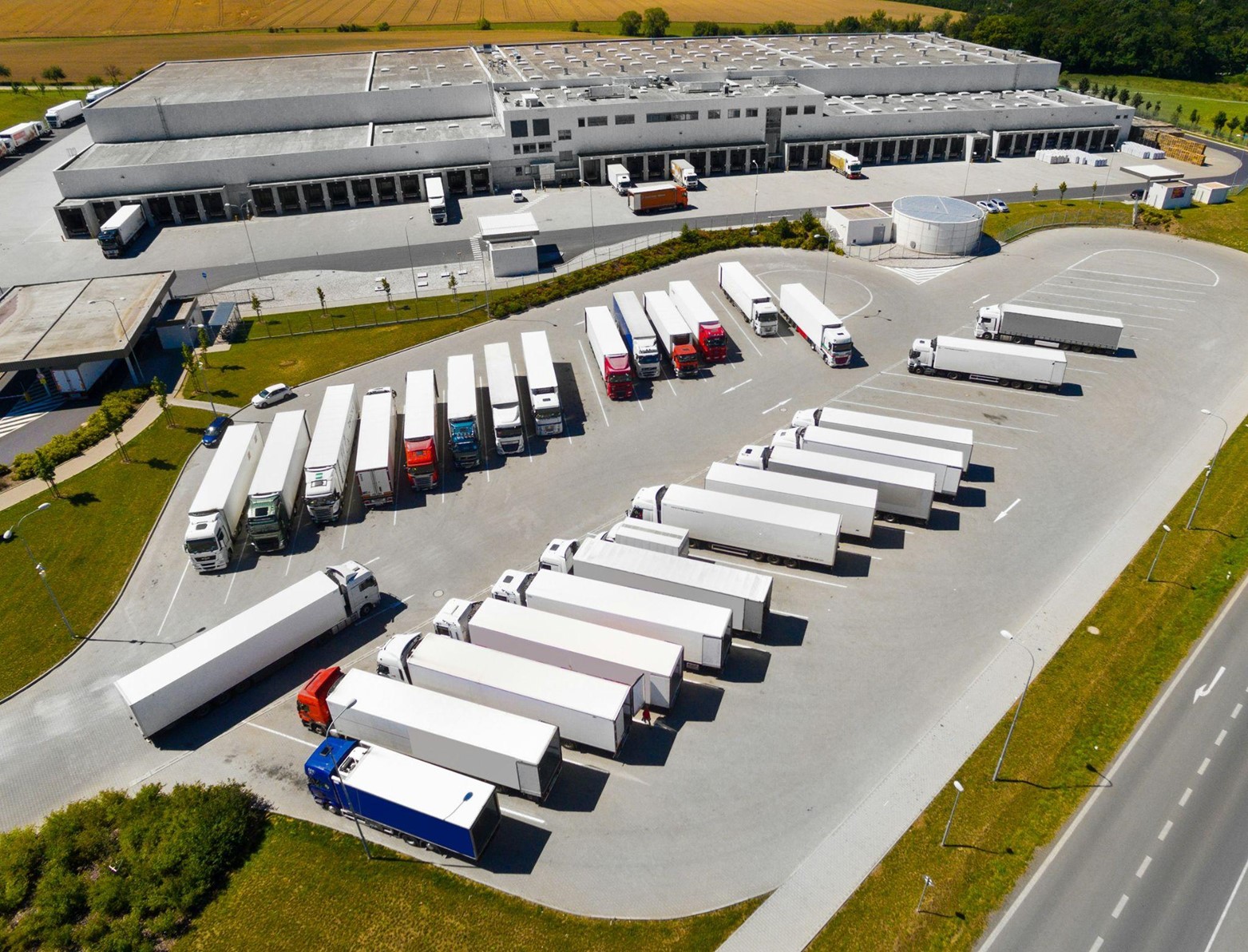
Global challenges and delays at the EU-Ukraine border
The current situation on the western borders is characterised by a high degree of uncertainty. According to analytical reports The World Bank, The efficiency of supply chains in developing countries is 40% dependent on cross-border facilitation. For Ukraine, this is manifested in long queues that arise due to excessive infrastructure pressure and periodic strikes or increased inspections.
Cargo downtime leads to:
- Increase in logistics costs - payment for drivers' downtime and vehicle rental.
- Product spoilage is particularly critical for the FMCG and agricultural sectors, where deliveries must be made within tight time windows.
- Loss of partner confidence - European retailers value accuracy, and any delay damages the reputation of the exporter.
Logistics is becoming not just a service for business, but a risk management tool.
Why congestion occurs at checkpoints
The main reason for the delays is that the existing terminal network is not designed to handle the volume of exports from Ukraine. Overloaded checkpoints become a bottleneck, where border crossing can take from several hours to several days.
In addition to physical bandwidth, there are other factors that influence the situation:
- Changes in customs regulations. The implementation of new European directives requires time to adapt staff and systems.
- Seasonality. Peak loads during harvest or pre-holiday periods create abnormal queues.
- Differences in technical equipment. Uneven implementation of scanners and automated systems on different sides of the border.
According to OECD, simplified customs procedures can reduce trade costs by 14%, which underlines the importance of a professional approach to document preparation. Logistics services in 2026 will include intelligent planning to circumvent these obstacles. Rapid, for example, uses live monitoring systems and multimodal schemes to minimise risks.
Border clearance and customs clearance: legal aspects
Often, problems at the border arise not only because of the physical number of vehicles, but also because of errors in the documents. Incorrect paperwork at the border is the easiest way to get delayed out of the blue.
Efficient passage customs requires in-depth knowledge of European legislation from the logistics operator. A reliable company takes care of it:
- Audit of supporting documentation. This is a check of compliance with the UKTZED codes and the availability of all necessary certificates.
- Advising on invoices. In particular, to prevent situations when EU customs authorities question the value of goods.
- Preparation of transit declarations. This is about ensuring unimpeded movement through several countries of the Commonwealth.
Transport services in Europe Today, it is 50% for working with documents and 50% for working on the road.
Technologies against congestion: the role of IT and artificial intelligence

Modern logistics Ukraine Europe is impossible without digital technologies. The introduction of artificial intelligence to predict delays allows transport companies to warn customers in advance of possible deviations from the schedule.
Innovative solutions include:
- Predictive models. AI analyses historical data on border delays and current weather to calculate the most likely time for border crossing.
- Digital twins of routes. Testing different delivery scenarios before the vehicle leaves the warehouse.
- Automated notifications. The client receives notifications about busy checkpoints and offers to change the route in real time.
This creates trust. A client who sees real problems at the EU border through their dashboard can adjust their marketing plans or sales timing in time.
Comparative characteristics of strategies for overcoming downtime
To keep your business efficient, you need to understand the difference between outdated methods and modern logistics standards.
| Factor. | Traditional approach | Rapid approach (Logistics 2026) |
| Route planning | Direct route to the nearest border | Dynamic selection based on queue analysis |
| Working with documents | Registration at runtime | Preliminary verification and digital copies |
| Communication with the driver | Phone calls once a day | GPS tracking and real-time chat |
| Risks | Waiting in the general queue | Using AEO status for priority travel |
Economic impact of delays on production costs
For many companies, exporting goods is the only way to grow. However, without a reliable rear guard, delays at the EU-Ukraine border can make goods uncompetitive in terms of price.
According to Eurostat, Logistics costs on average account for a significant proportion of the cost of goods. If this figure increases due to queues, business loses its meaning. That is why logistics services for business should be comprehensive: from the packaging of the cargo to its unloading at the customer's warehouse.
Additional costs arising from cargo downtime:
- Penalties - failure to fulfil obligations to European counterparties.
- Fuel costs - the operation of the engine to maintain the temperature in the refrigerator while it is waiting.
- Increase in insurance premiums due to increased risks when cargo is in transit for a long time.
Psychology of logistics: why customer peace of mind is more important than speed
Fast delivery of goods to the EU in 2026 - is often a lottery. However, stable delivery is the result of the work of professionals. A business is ready to wait 12 hours longer if it knows exactly when the cargo will arrive, rather than live in the hope of «fast» but get a week of downtime.
Rapid relies on predictability. Understanding that international transport passes through complex areas, we provide our customers with all the necessary analytics. This allows our partners to plan their inventory and operations without surprises.
The future of borders: joint control and digital queues
The development of Ukraine-Europe logistics is impossible without improved infrastructure. It is expected that by the end of 2026, more border crossing points will switch to a joint control system, which will significantly reduce time of border crossing.
They will also play an important role:
- «Green corridors for environmentally friendly transport and perishable goods.
- Full integration of customs systems, when data on cargo is transferred to the EU as soon as it is loaded in Ukraine.
- Expanding the network of logistics hubs near the borders to ensure prompt transshipment of goods in case of critical blockages.
Practical advice for business: how to avoid downtime
To prevent your transport operations from becoming a source of losses, you should take a strategic approach:
- Diversification of routes - do not rely on one checkpoint, always have a plan B.
- Investing in quality documentation - customs clearance must be flawless to avoid any reason for delays.
- Choosing partners with their own resources - having your own fleet and dispatching service with a carrier such as Rapid is your main guarantee.
- The use of pre-declaration allows customs authorities to process data before the car arrives at the border.
To sum up, delays at Ukraine's border are a reality that cannot be ignored, but can and should be managed. A professional approach transforms queues at the border from a disaster to a controlled workflow.